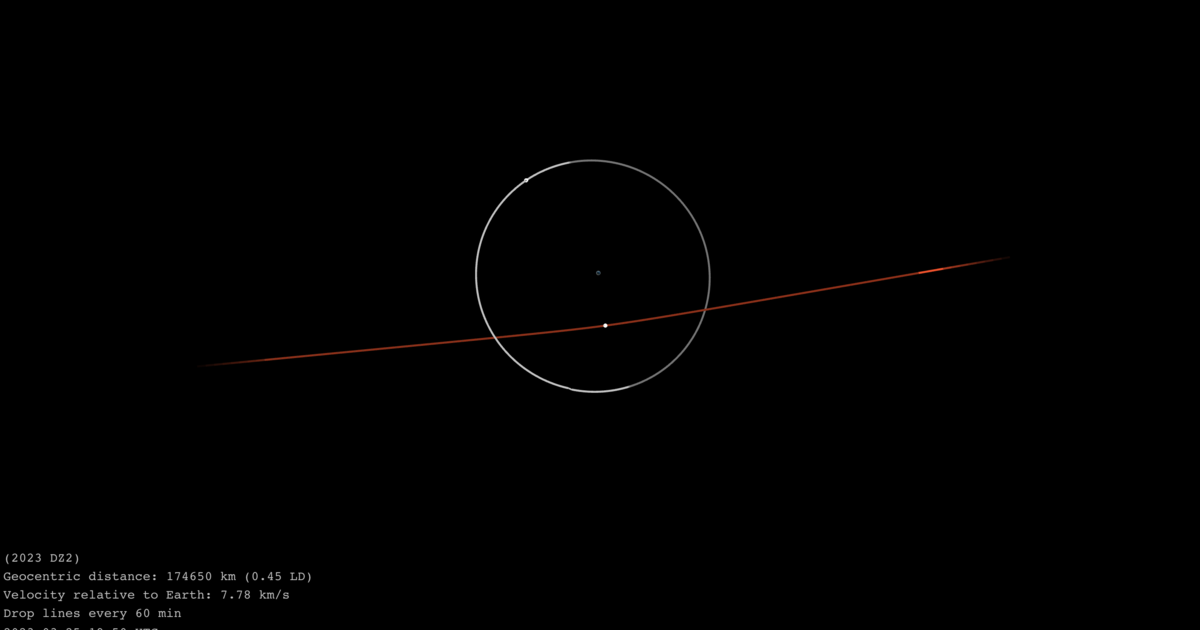
An asteroid will zoom past Earth this week at such close range that standard telescopes may be able to spot it in the night sky, experts say.
The space rock, dubbed 2023 DZ2 by NASA, is expected to fly between Earth and the moon at speeds exceeding 17,400 miles per hour, according to the agency, which assigned it a rarity score of three as the occurrence only happens roughly once per decade.
NASA warn a newly discovered asteroid 2023 DZ2 will closely approach Earth on Saturday - AS USA

It's been an eventful March in space news, from the launching of the sixth joint mission between NASA and Space-X of a crewed mission to the International Space Station to debris from the orbiting scientific platform burning up in the atmosphere over Northern California as well as the ...
Asteroid as big as 310 feet in diameter to pass by Earth - Washington Times
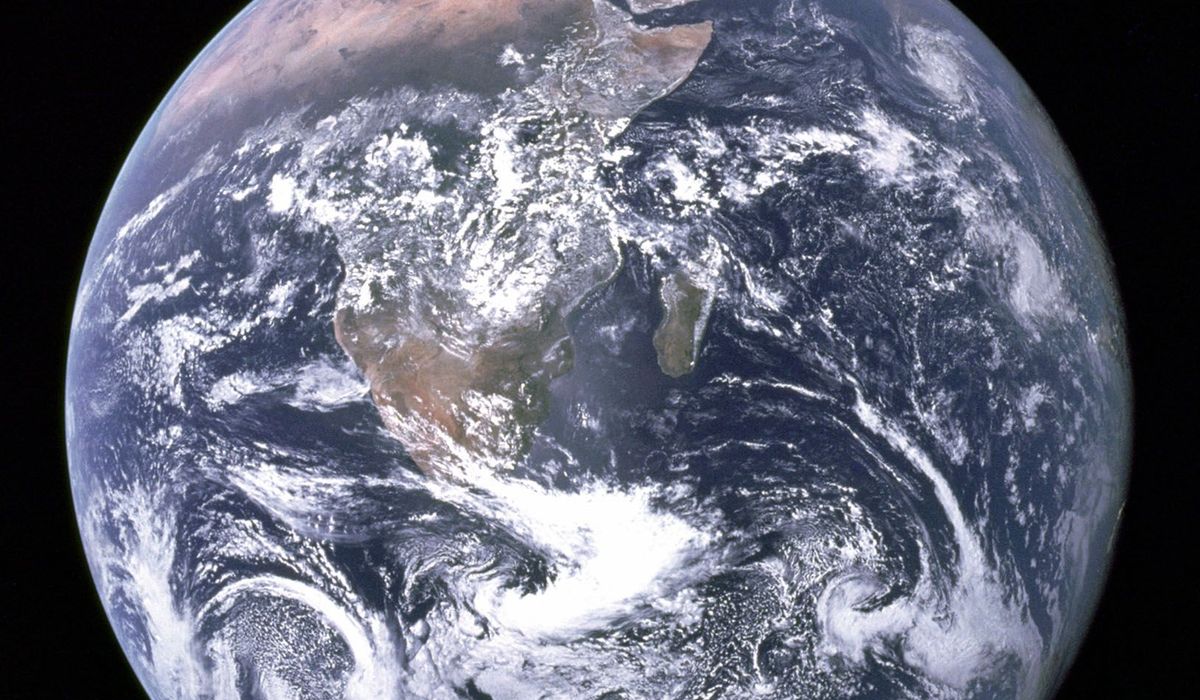
A large asteroid that could be 140 to 310 feet in diameter will safely pass by Earth on Saturday afternoon.
By comparison, the space rock that entered the atmosphere and exploded near Chelyabinsk, Russia, in 2013 was 65 feet in diameter.
Asteroids as large as 310 feet pass by the Earth only once a decade, NASA says. NASA data indicates that, at its closest approach at around 3:51 p.m. EDT Saturday, this asteroid — named 2023 DZ2 — will be 108,500 miles away from our planet.
The NASA collision that changed the course of an asteroid | News | crowrivermedia.com

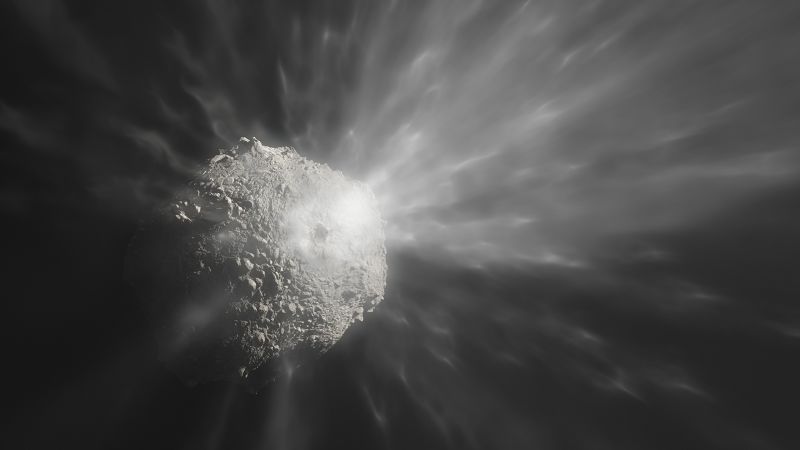
The refrigerator-sized NASA satellite drove straight into Dimorphos at 14,000 mph - destroying itself in the process.
This series of images shows the evolution of the cloud of debris that was ejected when NASA's DART spacecraft when collided with the asteroid Dimorphos. (Photo via SWNS)
Asteroid forms a debris cloud after intentional hit from spacecraft | CNN
Sign up for CNN's Wonder Theory science newsletter. Explore the universe with news on fascinating discoveries, scientific advancements and more .
Telescopes around the world were watching when a NASA spacecraft intentionally crashed into an asteroid in September 2022.
The space rock's anticipated trajectory places it at about half the distance to the moon, so people with telescopes… https://t.co/EmAQaQoKpI CBSNews (from New York, NY) Wed Mar 22 19:45:00 +0000 2023

No comments:
Post a Comment