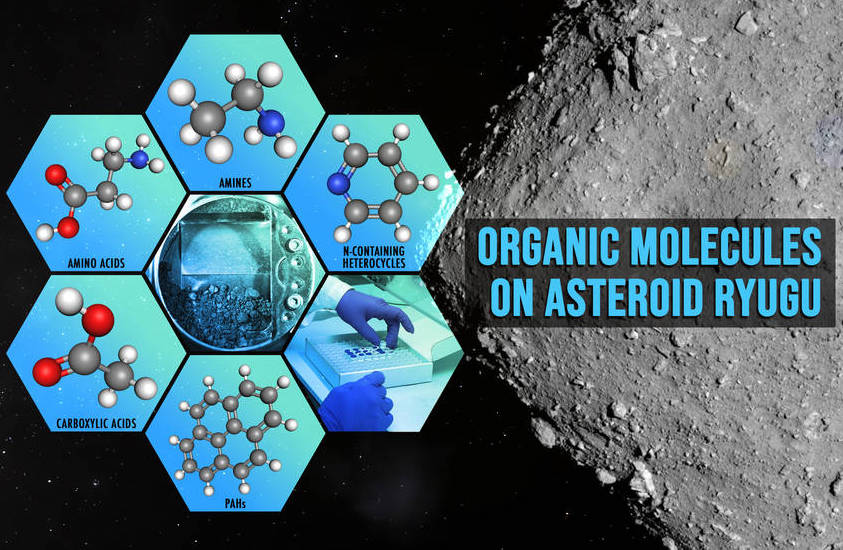
Asteroid Ryugu has a rich complement of organic molecules, according to a NASA and international team's initial analysis of a sample from the asteroid's surface delivered to Earth by Japan's Hayabusa2 spacecraft.
Solvent extractions of the Ryugu samples on a clean bench (ISO6, Class 100) inside a clean room (ISO5, Class 1000) performed by Hiroshi Naraoka at Kyushu University in Japan. Credits: JAXA

Asteroid Ryugu Was Changed By Water And Holds Organic Molecules Older Than The Sun | IFLScience

Ryugu seen by Hayabusa-1. Image Credit: Image © JAXA, University of Tokyo, Kochi University, Rikkyo University, Nagoya University, Chiba Institute of Technology, Meiji University, University of Aizu and AIST
Scientists continue to unveil new clues about the composition of Asteroid Ryugu .

ESA - Eyes on Hera: Asteroid mission's cameras ready
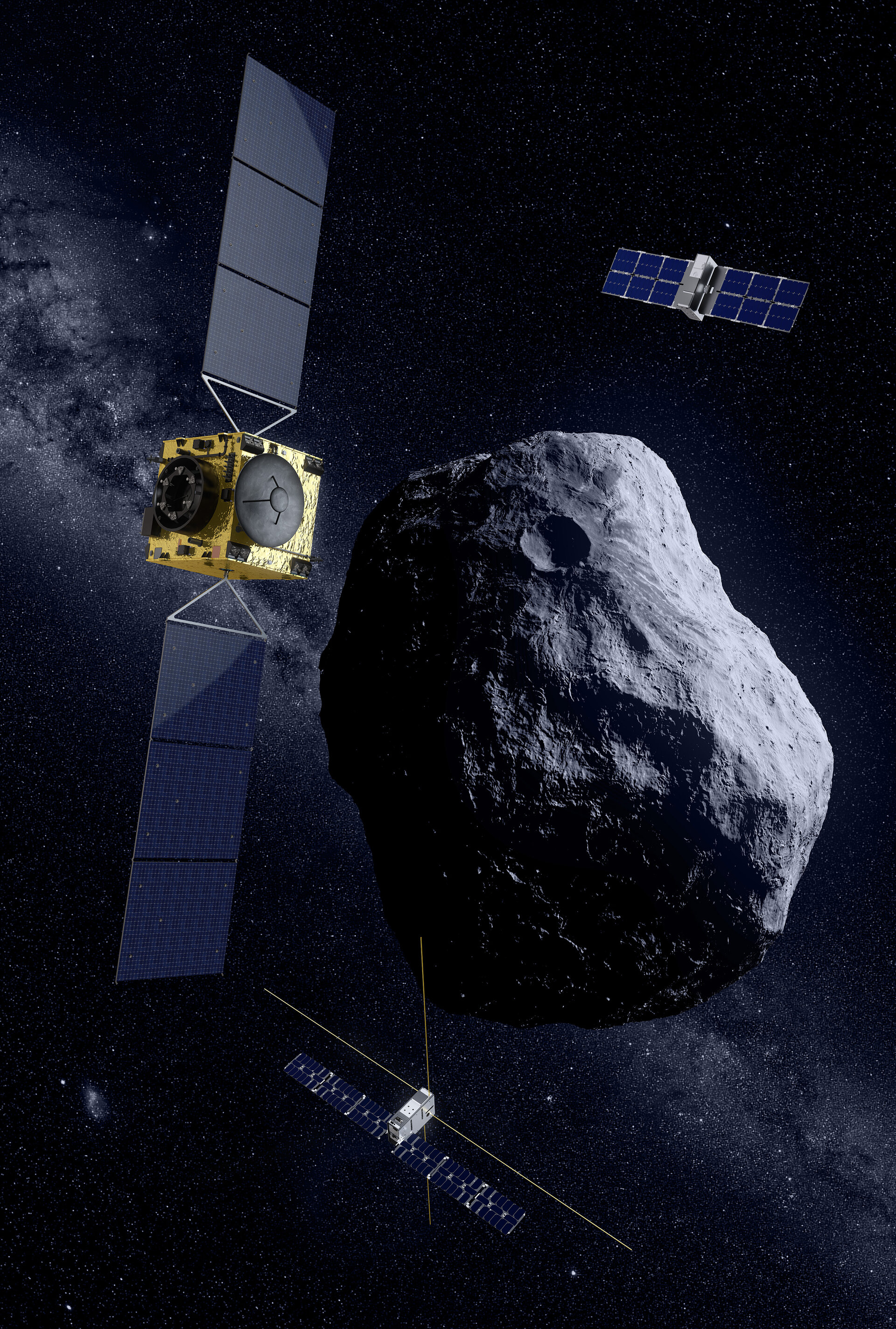
ESA's Hera asteroid mission for planetary defence is about to gain its sight. Two complete and fully tested Asteroid Framing Cameras have reached OHB in Germany for integration aboard Hera's payload module.
"It is a huge milestone to have the very first Hera payload ready for integration onto the spacecraft," comments Hannah Goldberg, Hera system engineer.
News at a glance: New asteroid hunter, shark hatchery, and a telescope disrupted | Science | AAAS

China is constructing the world’s largest radar astronomy array, which will help track asteroids that could threaten Earth. The new observatory could help fill a void in the world’s ability to detect such objects, created when the Arecibo Telescope in Puerto Rico collapsed in 2020.

The @haya2e_jaxa spacecraft collected a combined total of 5 grams from two locations on near-Earth asteroid #Ryugu.… https://t.co/w6Ficab4ll ScienceMagazine (from Washington, DC & Cambridge, UK) Thu Feb 23 19:05:31 +0000 2023
First look at Ryugu asteroid sample reveals it is organic-rich @NASAGoddard @sciencemagazine https://t.co/w9ReKBP22Y physorg_com Thu Feb 23 20:56:17 +0000 2023

No comments:
Post a Comment